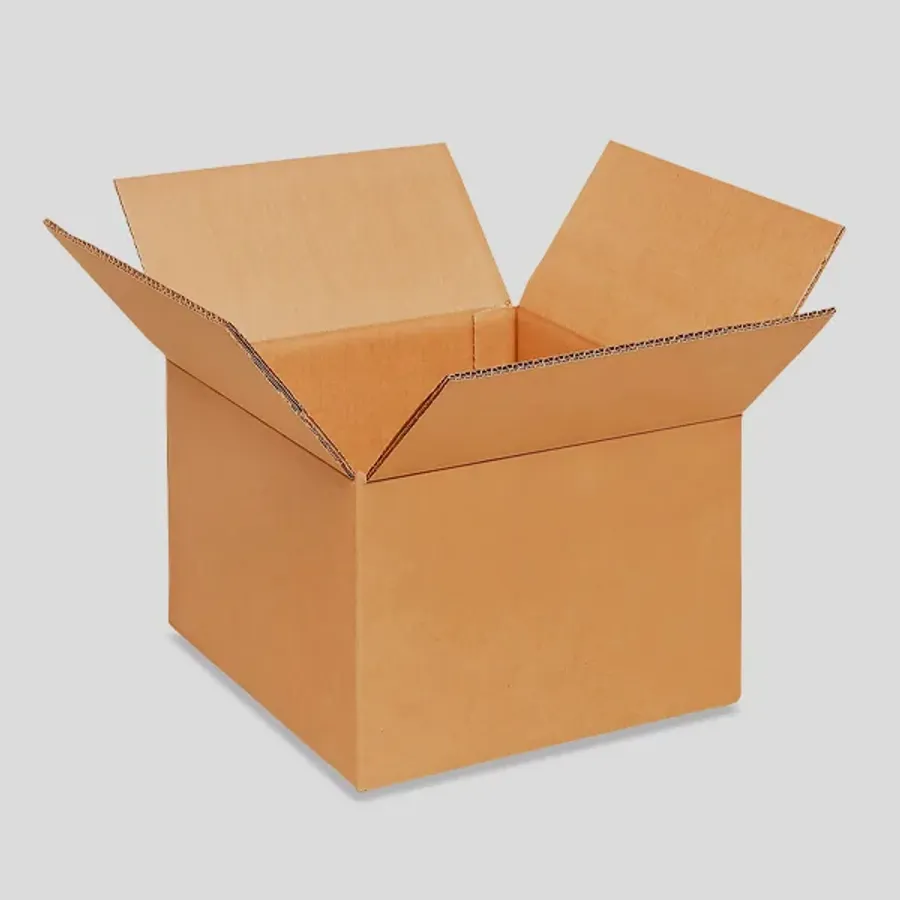
Box guide
Single Wall vs Double Wall Boxes
How to tell which wall strength your shipments need, with thickness, weight and size trade-offs.
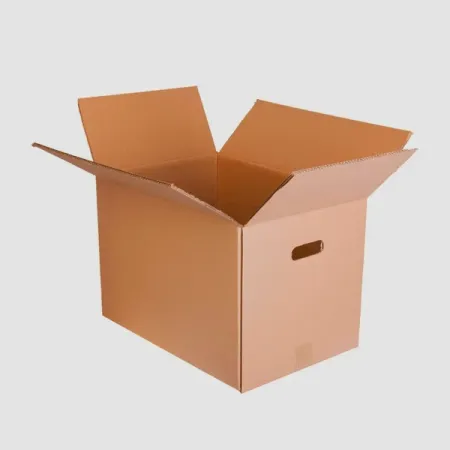
What is the real difference between single wall and double wall?
Corrugated board is a sandwich. Single wall has one rippled layer between two flat sheets. Double wall stacks two rippled layers with a flat sheet between them, plus one on each face.
The ripples are called flutes. Each flute works like a small bridge, and a second row gives a second set of bridges. That is why double wall resists squashing and sharp impacts better.
You can spot the difference on a cut edge. One wavy line means single wall. Two wavy lines, one above the other, means double wall. The full breakdown of flute sizes is in our corrugated board flute guide.
How thick is each board, in inches?
Thickness comes from the flute you pick. Here are the boards we make, with approximate figures.
Paper weight inside the board also changes how stiff it feels, so thickness is only part of the story. Tell us what you pack and we suggest a board on your quote.
| Board | Wall | Approx. thickness | Often used for |
|---|---|---|---|
| E flute | Single wall | 1/16 in (1.5 mm) | Small retail boxes and light mailers |
| B flute | Single wall | 1/8 in (3 mm) | Everyday orders and lidded boxes |
| C flute | Single wall | 5/32 in (4 mm) | Medium cartons and storage |
| BC flute | Double wall | 1/4 in (7 mm) | Heavy, fragile or stacked loads |
When does single wall do the job?
Most online sellers ship in single wall every day. T-shirts, candles, paperbacks, skincare sets and phone cases all travel well in it when the box fits snugly.
A common packer's rule of thumb is single wall for boxes up to about 20 lb that will not sit under a tall stack. That is a starting point, not a rating, so test with your own product.
Single wall also folds cleaner and ships lighter. On boxes under about 6 in long, double wall can look bulky and fight the folds. For a typical Etsy or Shopify order, take a look at our ecommerce shipping boxes.
Fit beats thickness for light goods. A snug B flute box often protects better than a loose double wall one.
When is double wall worth paying for?
Double wall makes sense when a box faces more than an easy trip. Look at this list and count how many lines describe your shipment.
One match may be fine with C flute. Two or more matches point to double wall. You can browse our double wall boxes to see the styles.
- The packed box weighs 30 lb or more
- Cartons are stacked three or four high on a pallet
- Contents are glass, ceramic or other breakables
- The box will be handled many times on the way
- Boxes sit in a warehouse for months
- Items have hard corners that could poke through thin walls
How do weight and box size change the cost to ship?
Carriers in the US price by size, weight and dimensional (DIM) weight. DIM weight is a calculated weight based on how much space the box takes up.
Thicker walls add to outside size. A BC double wall box grows by about 1/2 in (14 mm) in each direction, while B flute adds about 1/4 in (6 mm).
On a 12 × 9 × 4 in inside size, that can push a package into a bigger size bracket. Check before you commit, especially if you ship thousands a month.
Our guide to the cheapest way to ship boxes shows how to keep that bracket in check.
For a few heavy orders, protection comes first. For high volume, a lighter board can save real money over a year.
How do I choose the right wall in six steps?
Do this with a packed sample on the table. Not sure after step six? Send us the packed weight and a line about the contents, and your quote will include a board suggestion.
- Weigh the fully packed box, including inserts and tape.
- Write down whether the contents can crack, bend or leak.
- Decide how many boxes will sit on top of each other.
- Count how many times the box gets handled before it arrives.
- Start with B flute if the box is light, solid and not stacked.
- Step up to C flute or BC double wall as weight, risk or stacking grows.
Which wall suits which product?
Soft goods like hoodies, plush toys and boxed cosmetics are single wall jobs. They bend instead of breaking.
Candles, ceramic planters and bottles of hot sauce sit in between. Single wall with a fitted insert often works. Heavy or very fragile versions of those goods lean toward double wall.
Kitchen equipment, hardware, cast iron and bulk food service supplies belong in double wall. A restaurant sending jars of sauce to several locations is a good example.
Mugs are their own case, since they chip at the rim and handle. Our mug shipping boxes pair snug fits with the right board.
What about storage boxes and moving?
Storage is a slow test. Boxes at the bottom of a stack carry weight for months, and humidity softens board over time.
For an office archive, books or kitchen goods, BC double wall holds its shape longer. Lighter items such as linens can stay in single wall.
Keep boxes off bare concrete and away from damp walls. Any corrugated board weakens when wet. If you need a dedicated style, see our cardboard storage boxes.
Mark the weight on the side of heavy boxes. It saves backs and burst bottoms.
What mistakes should I avoid when picking a wall?
The first mistake is ordering double wall for everything. It adds weight, outside size and cost to orders that would arrive fine in single wall.
The second is saving money on thin board for heavy goods, then paying for replacements. Weigh ten typical orders before you decide.
The third is ignoring fit. A thick box with loose contents still lets things move. Fill gaps or add an insert.
The fourth is judging by hand feel. A box that seems stiff may still crush in a stack, so pack and stack a real sample.
Finally, ask for both prices. When you request a quote, we can price single wall and double wall at your quantity so you compare side by side.