Box guide
Corrugated Board Flute Guide: E, B, C and BC Compared
E, B, C and BC flutes compared in inches and mm, with the jobs each board does best.
What does flute mean on a cardboard box?
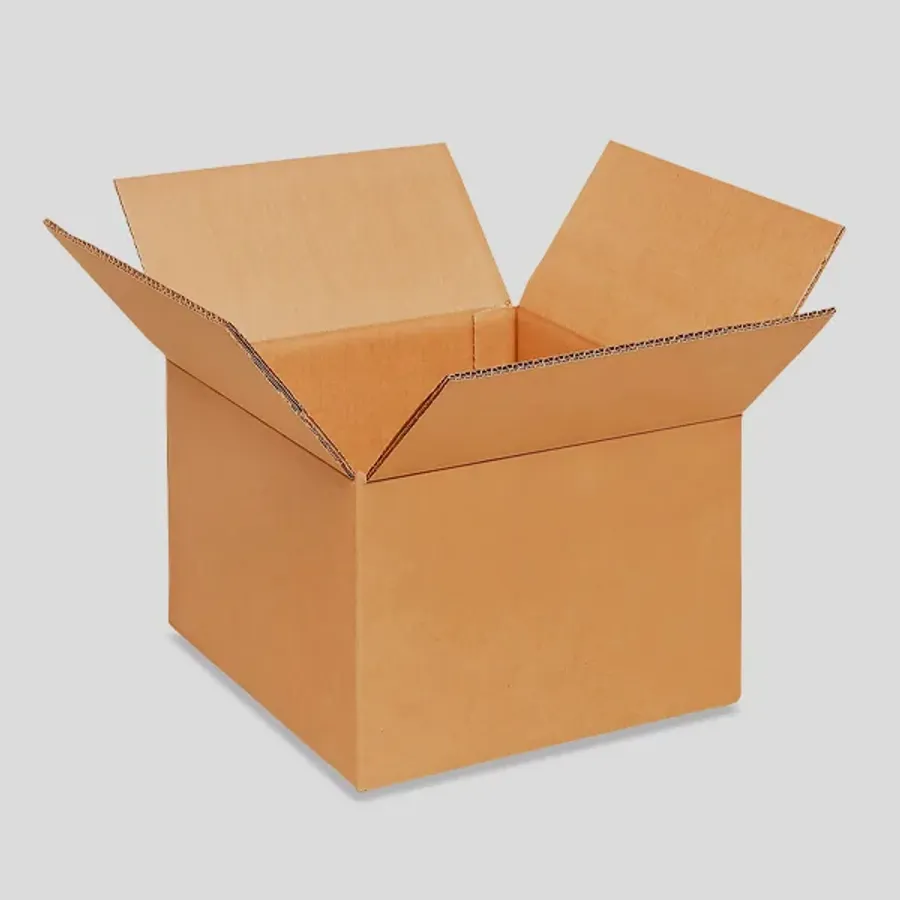
Look at the cut edge of any shipping carton. You will see two flat paper layers with a ruffled sheet sandwiched between them. The ruffled sheet is the flute. The flat layers are called liners.
Paper is crimped into waves, then glued to the liners at every peak. Each wave works like a tiny arch. Together the arches make the board stiff, springy and light.
Flutes carry letter names. The letters follow the order the profiles were first developed, not their size. That is why C is thicker than B, and E is the thinnest of the four we use.
Two things set how a board behaves: the height of each wave and how tightly the waves are packed. Tall waves cushion. Small, tight waves give a flatter face.
How do E, B, C and BC flutes compare?
The figures below are approximate. Liner paper and glue can shift the real thickness slightly from one run to the next.
Double wall is two flutes stacked in one sheet, so it is named by the pair of letters instead of a single profile.
| Flute | Thickness | Print surface | Cushioning | Typical use |
|---|---|---|---|---|
| E flute | About 1/16 in (1.5 mm) | Smoothest | Light | Small retail and gift boxes |
| B flute | About 1/8 in (3 mm) | Very good | Moderate | Mailers and everyday orders |
| C flute | About 5/32 in (4 mm) | Fair | Good | Larger cartons and storage |
| BC double wall | About 1/4 in (7 mm) | Fair | Strongest | Heavy or fragile contents |
When does E flute make sense?
E flute is the slimmest board we make, at roughly 1/16 in. Its small waves sit close together and leave a very flat face.
That flat face is why E flute suits boxes that get looked at. Think candle cartons, cosmetics, small gift sets and a subscription teaser box. Folds come out sharp and corners stay tidy.
It cushions less than the thicker boards, so a snug fit matters. Add a folding carton insert for small items if the contents can move.
E flute also stacks flat in a small space. A pallet of flat E flute boxes holds many more units than the same pallet of C flute.
Is B flute the right default for most orders?
B flute measures about 1/8 in. It balances stiffness, clean print and weight better than any other single wall board.
Many Etsy and Shopify sellers ship nearly everything in B flute. A 12 × 9 × 4 in mailer holding a 3 lb candle set or a stack of paperbacks is a typical case.
The waves are fairly tight, so B flute resists pokes and dents from the side. It also folds well into locking tabs and tuck flaps.
If you cannot decide between boards, start here. Our custom mailer boxes in B flute show how well it handles daily shipping.
When should you move up to C flute?
C flute is about 5/32 in thick. Its waves are taller and wider, so it absorbs more pressure from above.
It is a common pick for bigger cartons and stock that sits in a warehouse. A 16 × 12 × 10 in box of kitchenware or a case of retail goods suits it well.
The taller waves can show faintly through the print. Bold logos and one or two colors look fine. Tiny type and photographs look better on thinner board.
C flute makes a sensible step up when B flute feels light but double wall feels like overkill. See our regular slotted containers for bulk packing for the usual carton style.
What does BC double wall add?
BC double wall bonds a B layer and a C layer into one sheet with three liners. The finished board is about 1/4 in thick.
Two rows of arches resist crushing far better than one. That matters for glassware, small appliances, heavy hardware and anything that gets stacked for weeks.
The cost is bulk. Your outside dimensions grow by about 1/2 in in each direction compared with the inside size you order. Small boxes also fold less tightly.
Not sure the upgrade pays off? Read how single and double wall differ before you decide.
How do you choose a flute step by step?
Go down this list in order. The first line that clearly fits your box usually settles the question.
- Write down what goes inside and roughly how much it weighs.
- If it is fragile, heavy or will be stacked, quote BC double wall.
- If it is a larger carton or storage box, quote C flute.
- If it is an everyday order or a mailer, quote B flute.
- If the box is small, detailed in print or shelf-ready, quote E flute.
- Ask us to quote two boards side by side if you are torn.
- Pack a few samples with real product and ship them to yourself before a full run.
How does flute change print and finishes?
Ink lands on the outer liner, and the flute underneath pushes against it. Smaller waves leave less ripple, so detail stays crisp.
Full color CMYK photos look best on E flute, and B flute is close behind. Thicker boards suit solid logos, large shapes and simple patterns.
Matte or gloss lamination, spot UV and foil stamping all sit best on a flat face. A premium finish on a shipping box often works better on B flute with an insert than on double wall.
Liners come in brown kraft or white. Kraft gives an earthy look, while white makes colors brighter. Liner color does not change strength. See custom printed boxes in several boards for options.
What signs tell you the flute is wrong?
Customer photos and return notes show you when a board is not doing its job. Track problems by box size, because one weak size can hide inside an otherwise good order.
Change the flute on your next run if you spot any of these.
- Corners arrive crushed or split, so try a thicker flute
- Boxes bow in the stack, so move to C flute or double wall
- Fine print looks ridged, so move to E or B flute
- Small boxes look bulky and fold badly, so use a thinner flute
- Shipping cost climbs because the box is oversized, so check whether thinner board will do
- Contents rattle inside a strong box, so fix the fit instead of the flute